The State of Electric Actuators in Mobile Applications
Key Highlights
- Electrification and automation of mobile machinery is helping drive uptake for electric actuators because of the control and efficiency they can provide.
- Auxiliary functions, precise motion control and applications requiring leak-free operation are among the current use cases for electric actuators.
- Many challenges still exist with using electric actuators in mobile applications, but continued adoption of electrification and automated functions will help drive future growth in those applications where they make sense.
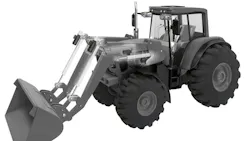
Increased development of electric and autonomous mobile off-highway equipment over the past several years has led to rising use of electric actuators in some construction equipment, forklifts and other applications.
Also referred to as electromechanical actuators (EMA), these devices are often employed because of the precision, control and other benefits they can provide.
EMA are proving to be a viable alternative to fluid power technologies in some applications, such as those with low-power requirements or in which it may be critical to prevent a hydraulic fluid leak from occurring.
Power & Motion spoke with three industry experts to learn how electric actuators are currently being used in mobile applications:
- Violet Urban, Strategic Marketing Manager – Americas, Linear Motion Division, Thomson Industries
- Mark Haughey, Off-Road Industry Manager, Schaeffler
- Nate Keller, Ph.D., Business Development Manager, Moog Construction
These industry experts offer their perspectives on best uses cases for electric actuators in mobile applications, ongoing challenges related to their use and how they see adoption of these devices progressing in the coming years.
*Editor’s note: Questions and responses have been edited for clarity.
Power & Motion: How have you seen use of electric actuators in mobile off-highway applications progress over the last 2-3 years?
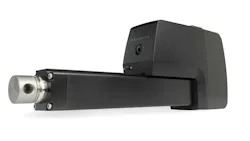
Violet Urban: Over the past several years, the automation and electrification of mobile off-highway (MOH) applications have accelerated, particularly in agriculture. Autonomous agrobots are increasingly used to pick fruit, control pests, irrigate fields, and monitor crop progress with drones and sensors.
These systems improve efficiency, reduce maintenance, enhance safety and help address labor shortages. This evolution has driven wider adoption of electric actuators while also pushing innovation in load handling, controllability, precision, connectivity and environmental sustainability.
Mark Haughey: We have had a steady pipeline of opportunities. We have seen the construction, agriculture and industrial trucks (forklifts and municipal vehicles) sectors experimenting with electric actuators. This learning phase has included modeling, lab testing, field testing, and even releasing initial products. In some cases, electromechanical actuators are already replacing existing hydraulic cylinders, but there are also applications where electric actuators are adding new functionality.
Nate Keller: Electric actuators are often used in conjunction with zero-emission technology. And as we’ve seen in the past 1-2 years, the zero-emission push has significantly declined and shifted more toward [the design] of a machine that reduces total cost of ownership for the end user.
With the zero-emission push trending down, we have seen a downward trend in electric actuators [in conjunction with it]. But I firmly believe in the longer run the market will go back in the zero-emission direction; there will be more of them in the market and a need for [these types of machines and electric actuators].
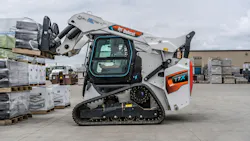
Power & Motion: Are there certain mobile applications where you’ve seen greater use of electric actuators compared to others?
Violet Urban: One of the largest drivers of electric actuator adoption in MOH applications is the proliferation of automated guided vehicles (AGVs) of all sizes, from those the size of robot vacuum cleaners to those the size of a small automobile. The compactness, programmability, self-driving capability and efficient battery consumption make electric actuators suitable for many MOH applications.
The “Bug Vacuum” from Agrobot uses high-velocity fans, operating at wind speeds up to 40 mph, to create suction that removes pests from crops as the vehicle autonomously moves through the furrows. Electric actuators autonomously control the height of the fans, providing position feedback and enabling fine-tuning of fan height in real time. A deviation of just a few centimeters can reduce efficiency or damage plants. Achieving this level of control with a fluid-based system would require additional pumps, hoses and continuous operation. An electric system simplifies the architecture and can be programmed for 24/7 autonomous operation with minimal maintenance.
Mark Haughey: We see most immediate opportunities in material handling applications. The indoor forklift market is mostly electric already, so manufacturers and suppliers benefit from replacing hydraulics with electric actuators. Data centers and warehouses are two big development areas right now as well that require a clean environment, so replacing hydraulic with electric makes a lot of sense in those applications.
Also, the agriculture sector was an early adopter and offers the largest potential.
For both [material handling and agricultural] markets, the latest opportunities have been tied to autonomous functions, as EMAs offer higher controllability and programming than their hydraulic counterparts. Automated guided vehicles need to be programable and able to accept other digital inputs when there is no human operator to assist.
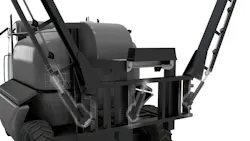
View our media gallery "Use Cases for Electric Actuators in Mobile Applications" for more images and illustrations of how electric actuators can be used in mobile applications.
Power & Motion: What are some of the best use cases for electric actuators in mobile off-highway applications?
Violet Urban: The increased load handling, hybrid implementations and scalable electromechanical technology are helping usher in a new era of precision agriculture, which brings with it new methods for reducing operating costs, improving quality and environmental sustainability.
John Deere’s See & Spray Ultimate system, for example, uses AI-driven vision technology to identify weeds and apply herbicide only where needed. Electronic nozzle control systems, driven by precision actuators, ensure that chemicals are delivered precisely to plants, reducing material costs and minimizing environmental impact. Instead of blanket spraying, the system selectively treats individual weeds without harming surrounding crops.
Fertilizer distribution is another example. Because soil conditions vary across a field, precise application ensures that the right amount of fertilizer is delivered to the right location. This improves crop yield while reducing waste and environmental impact.
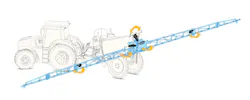
I have focused here on the agricultural sector, but much of what I have said about hybrid operations, supporting autonomous vehicles, and precision can relate to the MOH market in general. Construction applications, such as backhoes and cranes, can have a similar need for hybrid load handling, smarter linear motion control, compact size and environmental sustainability.
Mark Haughey: Auxiliary functions such as side mirrors, hood lifts or foot ladders are a good fit, especially as manufacturers are adding comfort and convenience features to their top-line machines. Schaeffler’s CAHB22S SmartX electromechanical linear actuator has an integrated controller that can be programmed for soft-start, soft-stop, and force limits, which add to both function and safety.
Watch our interview with Kirk Martin, Sector Sales Director Mobile Machinery at Schaeffler, to learn more about the mobile applications for which electromechanical actuators are best suited.
Nate Keller: Through talking with OEMs and end users, right now EMAs are more suited for use in 4- to 10-ton machines, so, skid steer or compact wheel loader size machines. Also, applications where zero emissions or zero hydraulic leaks are required as well as specialty applications in agricultural settings. Specialty crops that require higher control or zero leaks [are good use cases].
Electromechanical actuators in larger pieces of equipment is still a challenge as of right now. Hydraulics in larger machines will likely be more cost effective [because] they have more power density – meaning they take up less space for how much power they can output. The EMAs get very large and very expensive once you get to the size needed for a 14-ton or larger excavator. It is [technically] possible, but it takes up space and they get very expensive once they get larger.
Applications with automation or precision motion control requirements, like grade control, could benefit significantly [from use of EMAs]. You could use them for automated post hole digging. If you had an auger attachment on a CTL (compact track loader) or skid steer, you could have precision control so that it's always drilling at a perfect vertical without having to worry about what angle a post is going in at.
Power & Motion: What challenges remain with using electric actuators in mobile applications, and how might these be overcome?
Violet Urban: One challenge for motion technology designers and vendors is to incorporate the new capabilities without pricing themselves out of the market. Electromechanical actuator pricing is tightly linked to product features. Too much functionality adds costs; underspecifying reduces lifespan and reliability.
Another challenge is the appetite for innovation within the OEM sector. Right now, it appears that digital transformation is happening at a grand scale but remains subject to market volatility. Some large OEMs, for example, have slowed electrification initiatives due to reduced or uncertain government automation incentives for both manufacturers and end users. This volatility has placed certain projects on hold and contributed to a cautious investment climate.
One more significant challenge is matching the evolving technology to multivariate application needs. Advancements in sizing and selection automation, such as Thomson’s Linear Motioneering tools, remove much of the heavy lifting from the analysis. They allow engineers to input motion profiles, duty cycles, load requirements, and performance targets to narrow viable options. But in the end, balancing system, operational, environmental and even governmental considerations will require the judgement of experienced engineers, ideally from both the vendor and end user camps.
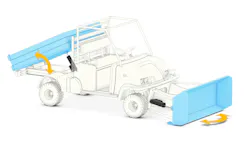
Mark Haughey: Electromechanical actuators are key enablers for maximizing the potential of [electric] mobile machinery, due to their higher efficiency and potential for battery regeneration. Nonetheless, the industry has learned in the last few years that it is not practical for larger equipment to go fully electric until better battery technology is available.
It won't be a surprise to anyone that there's been a little bit of a slowdown in the full electrification movement, and I think a fully electric machine has the best business case for an electric actuator. And I think that has kept some projects in the test phase longer than they would have. But, there's still advantages even if you're running internal combustion engines.
With respect to packaging, OEMs prefer backwards compatibility when replacing hydraulics. Cylinders require some redesign to accommodate electric actuators, which can be a hurdle for existing designs. When you look at the system, the total cost of ownership is as good or better with EMAs, which offer reduced complexity, less maintenance and higher efficiency.
Nate Keller: The cost aspect is one. Some things that can be overcome there are higher demand. As demand increases, volumes go up…and costs are lowered.
There's also the packaging aspect. Electromechanical actuators cannot fit in the same pin to pin location as a hydraulic cylinder if you want the same range of motion. With an EMA, you typically have bearings, some gearing at the back end that take up additional space that's not used for the normal travel portion. So, when you're putting in mechanical actuator in, if you put it in the same pin to pin location, you have reduced stroke length, reduced travel, and the machine won't be able to move as much.
And in order to overcome that, you have to redesign your linkage points on your machine. You would need to extend those linkage points out to account for that extra dead length on the electric actuator. That's one [of the reasons] why it's challenging to sometimes fit electric actuators into machines.
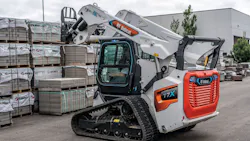
It is also going to be larger and heavier than a hydraulic cylinder. The reason for this is everything is self-contained at the cylinder. An electric actuator has the cylinder portion, typically a ball screw, bearings, gears and an electric motor all mounted at the same location whereas a hydraulic cylinder is just the cylinder and the rest of the hydraulic system components like pumps and valves are located somewhere else on the machine.
These can all be overcome if a machine is designed from the ground up, then it’s not an issue anymore. The issue comes when you’re trying to make electric fit on a machine that was designed for hydraulic. I think electric actuation will take off and have a place in some segments; the machine would need to be designed with electrification [in mind] from the ground up and not retrofitted to make it work.
Power & Motion: How do you see use of electric actuators in mobile applications continuing to progress in the next 3-5 years?
Violet Urban: Over the next 3-5 years, we see electric actuators increasing power density, improving controllability, collecting and using data more strategically, and targeting motion more precisely. Such innovation depends on a healthy technology marketplace in which startups and large OEMs alike identify changing needs and bring new solutions to market.
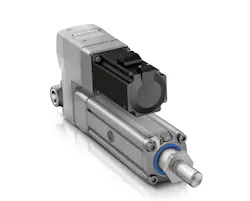
Mark Haughey: The compact construction equipment sector is releasing new electric models every year. As mentioned earlier, turf care, aerial work platforms (AWPs) and forklifts are growing areas of opportunity.
Any industry, sector or application that is implementing autonomous operation capabilities will use more electric cylinders. As people continue to add more and more autonomous functions onto their equipment, electric actuators are more attractive because they're more easily controllable and programmable. If you have a fully autonomous vehicle where there's not an operator, it really has to take all of its inputs from other digital signals. Actuators are just more open to that architecture than hydraulic cylinders.
Nate Keller: I think with electrification, we are now doing a self-correction and making it more realistic. Eventually, I think we will get to full electric, likely in 10-20 years, closer to 20. In the meantime, there's things that are being done to adopt some of the electrification aspects and put them in now, like the CAT D6 dozer still running on diesels while having the benefits of electric control.
In the next 3-5 years, I don't anticipate a significant uptick in electric actuators for the general construction industry. I see them increasing [in use] as you get to that 10- to 15-year timeline when automation and autonomy start taking more control of the market. As we see autonomy increase, the EMAs will increase with it. With the caveat of likely not on the big machines — the 14-, 20- and 30-ton sizes. Possibly, but likely not.
But I definitely see it on more of the specialty equipment and some of the smaller equipment, and could see it in mining, including underground mining, as well.
About the Author
 Sara Jensen
Sara Jensen
Executive Editor, Power & Motion
Sara Jensen is executive editor of Power & Motion, directing expanded coverage into the modern fluid power space, as well as mechatronic and smart technologies. She has over 15 years of publishing experience. Prior to Power & Motion she spent 11 years with a trade publication for engineers of heavy-duty equipment, the last 3 of which were as the editor and brand lead. Over the course of her time in the B2B industry, Sara has gained an extensive knowledge of various heavy-duty equipment industries — including construction, agriculture, mining and on-road trucks —along with the systems and market trends which impact them such as fluid power and electronic motion control technologies.
You can follow Sara and Power & Motion via the following social media handles:
X (formerly Twitter): @TechnlgyEditor and @PowerMotionTech
LinkedIn: @SaraJensen and @Power&Motion
Facebook: @PowerMotionTech