Automation Remains an Investment Priority for Industrial Applications
Key Highlights
- Three experts from Bosch Rexroth discuss the trends and industries they see driving the industrial automation market.
- Despite some current slowing in the market, over the long-term they see investments in automation continuing to grow due to its ability to aid productivity improvements and overcome labor shortages.
- Full electrification, humanoid robots, and use cases for AI are some of the technology developments for the automation sector they look forward to seeing at Automate 2026.
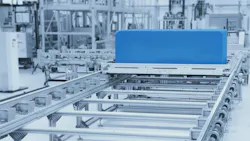
Automation continues to be a key development area for machine builders and their customers in a wide range of industrial applications. It is integral to improving productivity and addressing the skilled labor shortage many sectors are facing, factors that will continue to drive uptake of automation in the years to come.
To gain insight into the current state of the industrial automation landscape, I recently spoke with three industry experts from Bosch Rexroth:
- Richard Vaughn, Head of Product Management – Linear Technologies
- Joaquin Ocampo, Product Manager – Automation & Electrification
- Bill LeAnna, Sales Product Manager – Transfer Systems.
They each offered their perspectives on where they see the industry at today and the sectors in which they see automation increasing.
Read the second part of my interview with Vaughn, Ocampo and LeAnna, "Industrial Automation Requires Faster and Easier to Use Solutions" to learn about the technological developments and challenges which remain in the industrial automation space.
Or check out the video versions of my interview with Vaughn, Ocampo and LeAnna:
Industrial Automation: Current Opportunities and Challenges
Automate 2026: Electrification, Humanoid Robots and AI to be Key Trends of Interest
I also spoke with them about the technologies and trends they are looking forward to seeing showcased at Automate 2026, considered North America’s largest robotics and automation event.
*Editor’s note: Questions and responses have been edited for clarity.
Power & Motion: What is the current state of the industrial automation market? Are people still investing in automation technologies?
Bill LeAnna: The market's been kind of slow over the last couple of years. There's a lot of companies that are just managing with what they currently have. We did start to see an uptick in business in 2026, but it seems to maybe be leveling out this year. So we really don't have a good idea as to where things are headed in the next couple of years.
Richard Vaughn: From my side, we've seen a lot of the geopolitical tension that's been out in the market that's really caused hesitation with a lot of projects that there's funding that was set aside for, but it's not being released.
There's a lot of excitement as to where it's [automation] going. Some industries we're seeing, at least on the linear side of the business, more investment than others. But as Bill alluded to, there's this hesitation, or kind of a pause; there’s some exciting things…we know that we’ll see in the future as [automation] keeps going. There's a lot of lot of good stuff out there, and excited to see it get it released.
Read the content below to learn more about some of the geopolitical events that have been impacting automation and a range of other industries.
 Aerial view of a cargo ship sailing through open waters
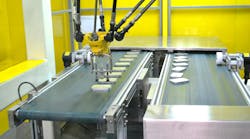 A robot working on a production line
Joaquin Ocampo: To build on that, it is going to build up regardless of what's happening today. I think the future is showing up, there's always a lot of interest for automation. There's always a lot of changes in the market. Resources are different, people are learning more stuff, people want better quality products and all this stuff, and that's pretty much accomplished with automation, so the future will be good.
Power & Motion: Are there specific industries or applications where you are currently seeing more interest in automation solutions than others? If so, what are those industries or applications and why are they investing in automation?
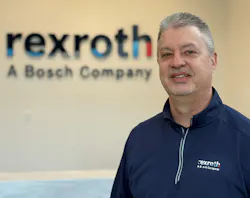
Richard Vaughn: From the linear technology perspective, we're seeing a large uptick in semiconductors. It's primarily driven by AI (artificial intelligence), all the buzz that's been out there; we're actually now seeing it as that industry I'll say behaves a little bit differently than a lot of the others, but is a lot of times a leading indicator for the other markets as they tick up.
Another industry we've seen an uptick in is aerospace. Some of it is defense related spending that's going on, and then just the general aerospace industry where we're seeing applications pop up, and interest that's been some good, steady growth up front.
Bill LeAnna: We are seeing an uptick in the defense industry. A couple of our biggest customers this year have defense related projects or are part of the defense industry. So, we expect to see a definite uptick in that industry.
And automotive has always been good. There's some trepidation in where things are going, whether things are going to be full EV (electric vehicle) or hybrid. But there's still growth there. There's still opportunity. So those two markets are really what we're depending on primarily this year.
Joaquin Ocampo: Automotive has a lot of automation in it and keeps adding it and having less people in the building. Warehouse and logistics is growing a lot. The companies shipping stuff to our houses want to automate all of that inside the warehouses and have as few people as possible…to get stuff out faster and not break things or lose it.
One market we’re trying to get into, it always has automation, is controlled environment agriculture (CEA) where they grow lettuce and [other produce] in a building. It has a lot of automation because you have to know when to water the plants, make sure they have the correct [fertilizer], pesticides, etc. A lot of AI is implemented into that and a lot of sensors. That’s a growing [market] – our population is not getting any smaller, so this area is growing a lot.
Power & Motion: What trends or technologies are you most looking forward to seeing at Automate 2026? Are there any new trends entering the market you expect to see showcased?
Bill LeAnna: I’ve been talking about full electrification, and that’s what I expect to see at the show. I don't think we're the only company that is being approached with that request, so my goal is to walk the show and kind of see what some other companies are doing in reference to moving their components towards full electric and how quickly they're accomplishing that. Sometimes we can be a little slow moving when we're transitioning from one medium to another. So it's going to be interesting to see where that's headed in the marketplace.
Richard Vaughn: I’m going to let the geek out of me a little bit with this part. What I’m looking forward to is actually the Humanoid Forum that’s there. I know the humanoids are a multibillion dollar investment industry. I know there's linear actuation on them. And there's both the trend of what it's taking to manufacture them as well as what they're being utilized for, and where they can go. I'm actually looking forward to learning a little bit about an industry I've got very little knowledge on right now, but excited to see another one come along.

Joaquin Ocampo: I will plug my colleague Jon Frey, he’s going to be doing a presentation about electrohydraulic closed circuit-drive and control solutions. I look forward to seeing what he has to say.
Of course, in the show, I want to see how AI is being used, how the data is being captured and managed, and how this helps for preventive maintenance or quality control. Yes, of course the robots are always interesting — how they use robots in the new production areas or assembly lines and stuff like that. Last year, I was amazed when I saw the humanoid robots.
And then sustainable and energy efficient automation. Let's see what [the industry is] talking about with that, and see if there's any options; we offer low code and no code to realize automation and [I want to] see if that's also being used in the market.
Power & Motion: Since it’s been brought up a few times, how are you guys seeing AI being used within the automation space, or what opportunities or benefits do you see it potentially offering at some point?
Joaquin Ocampo: In automation, we see AI more [with] visualization cameras, recognizing parts that are defective, or recognizing pick and place, or putting the parts in the right position for packaging. So AI is used a lot as a visual system.
AI is used a lot to make sure that the machine is running well. I don't think there has to be scheduled maintenance for machines if you have AI checking your machine making sure that all the axes are running correctly and there's no spikes in the torques. If it's not broken, don't fix it.
But if it's going to break, AI will give you a heads up ‘hey, this axis number three looks like it's having a little bit of trouble. And it could be a loose belt; it could be a bearing that's bad; it could be a motor that's going’ and then you could actually schedule the maintenance for that machine for that particular problem. It'll pinpoint where the problem is. Every time my car breaks, I open the hood and I wish there was an arrow pointing to what was broken in the engine.
So this is where we want to get with AI. It will help you pinpoint what's wrong and even help you with how to fix it. And it's going to give you instructions [how to do so]… the part number…it is going to lead you to Bosch Rexroth to order it. This is what we're thinking for AI as an example.
Richard Vaughn: I can't agree with that more. Living in the mechanical world as long as I have been, seeing the capability that's there with AI in conjunction with servo drives; just the auto learning and what you can do. And actually, instead of replacing a whole actuator, if it's got life in it, as you're predicting when you need maintenance, you can even auto address servo tuning, if applicable, in an application, just as the mechanical wear takes place. And being able to do that in your larger environments where you're losing thousands and thousands of dollars a minute, it's priceless being able to do that and not having to hold as much inventory on spare actuators, etc. So I see that trend continuing as we keep going down this journey.

Bill LeAnna: On my end, I see AI being used to understand the speeds to operate a production line. Joaquin mentioned the efficiency of a system, and that's really dependent on how fast you can feed in and feed out, whether it's components or complete assemblies, and AI can actually help adjust speeds of various components of the system to help optimize that production.
Power & Motion: What do you think will be some of the biggest themes and/or takeaways from this year’s show?
Joaquin Ocampo: I guess combinations of technologies. Bosch Rexroth has all these technologies, and we work well together. I want to see what other suppliers are presenting; connectivity, I want to see how they're connected with different vendors. I think cybersecurity is an important topic when it comes to AI, edge technology, remote connectivity; I want to see how network cybersecurity is being applied or addressed. And then ease of use. Let's see how easy it is to use this stuff in the market. So, I'm hoping I get some answers with those topics.
Richard Vaughn: For myself, I'm hoping to see some similar stuff as Joaquin. And I actually want to see where the automation trends are going, hear it from all the integrators and everybody that'll be there; and [see] some of the projects that I mentioned that have kind of been on hold and we'll see cut loose.
And then, you know, seeing competition, and everybody else that's there. There's been a real push for what I'll call mid-performance products in the industry, where you're seeing automation in areas that you never have, that we are even taking a look at with developing more in that spectrum. I'm curious to see how many others are doing the same. That's just created a whole separate part of the industry that there's a big need that will continue growing as well.
Bill LeAnna: Customers are looking for more modular building block approaches and/or turnkey solutions. So what I'll be looking for is companies that are providing complete solutions, basically out of the box solutions that they drop into a production line, and what they're including in their assemblies. Are they using aluminum framing? Are they using steel weldments? What manufacturers are they using for all their other components? So that's going to be important to see.
About the Author
 Sara Jensen
Sara Jensen
Executive Editor, Power & Motion
Sara Jensen is executive editor of Power & Motion, directing expanded coverage into the modern fluid power space, as well as mechatronic and smart technologies. She has over 15 years of publishing experience. Prior to Power & Motion she spent 11 years with a trade publication for engineers of heavy-duty equipment, the last 3 of which were as the editor and brand lead. Over the course of her time in the B2B industry, Sara has gained an extensive knowledge of various heavy-duty equipment industries — including construction, agriculture, mining and on-road trucks —along with the systems and market trends which impact them such as fluid power and electronic motion control technologies.
You can follow Sara and Power & Motion via the following social media handles:
X (formerly Twitter): @TechnlgyEditor and @PowerMotionTech
LinkedIn: @SaraJensen and @Power&Motion
Facebook: @PowerMotionTech