Fluid Power or Electric: 3 Key Considerations for Choosing an Actuator Type
Key Highlights
- Determining your machine's KPIs, such as load, speed, and the environment in which it will operate, is a critical first step when selecting an actuation technology.
- The total lifecycle costs of an actuation system, like potential maintenance needs throughout its lifespan, should be taken into account as well as the initial investment of a system.
- Assessing your team's expertise with hydraulic, pneumatic, or electric systems is an important consideration as well to ensure proper implementation and maintenance.
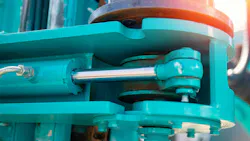
The debate whether to use hydraulic, pneumatic or electric actuation technologies is not new, but an increasingly common one. Evolving machine performance requirements, such as the desire for efficiency improvements and more automation, is causing many to consider electric actuators — also referred to as electromechanical actuators — in applications that have traditionally used fluid power.
However, there are still many instances in which hydraulics or pneumatics remain the best option.
Each actuation type has its pros and cons, as well as applications for which it is best suited. But how do you determine which one to use?
During Power & Motion’s webinar “Fluid Power vs. Electric Actuators: Understanding Their Differences and Use Cases,” Carl Richter, Vice President and General Manager, Kyntronics, and John Fenske, Director of Marketing and Product Management, Tolomatic, offered their industry expertise on how to determine which actuator type to use.
Their advice for choosing between hydraulic, pneumatic and electric actuators can be parsed down to three key questions to ask when starting the decision-making process:
- What are the machine KPIs?
- What is the budget?
- What internal skill sets are available?
1. What are the machine KPIs?
Fenske said one of the first steps to take is determining the key performance indicators (KPI) of the machine in which an actuation technology will be used as it will dictate the performance required of the chosen actuator.
What is the power required, what kind of loads and speeds? These are some of the basic considerations Richter said should be taken into account at the start of a project.
Are high forces required? If so, then hydraulic actuation is likely the right choice. Is there a need to employ complex motion profiles? Then an electric actuator may be the best option because of the controllability that can be achieved with these devices.
Interface controls, shock loads, side loads, the environment in which a machine operates, and desired lifespan are also important KPI-related factors to consider.
If, for instance, a high level of cleanliness is required by the application, then pneumatic or electric actuation is going to be the better choice as there is no potential for an oil leak as is the case with hydraulics. On the other hand, if shock loads will be an issue then it is best to use a hydraulic actuation system because, as Richter noted during the webinar, “hydraulics have no issues with shock loads.”
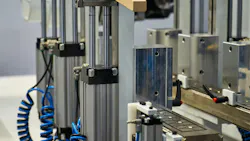
2. What is the budget?
Understanding the budget for a project is as important an aspect to consider as the performance requirements of a machine, noted Fenske.
He said that if looking strictly at initial capital costs, hydraulics and pneumatics are going to win every time. These technologies have been around for years and so are a lower-cost investment compared to electric actuators.
But when looking at total lifecycle costs, he said both fluid power and electric actuation technologies have the potential to win out, depending on the system architecture used.
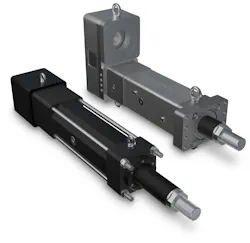
“That's something that I think customers need to really consider, is the whole lifecycle cost, [including maintenance and replacement],” said Fenske.
He noted electric actuators typically require less maintenance over their lifespan than hydraulic and pneumatic options, so that is something that should be taken into consideration when choosing an actuation type.
However, as Richter noted, one of the advantages of using hydraulics is that everything in the system can be repaired or replaced which can extend the lifetime of the system. Electric actuators, he said “are not really all that repariable, especially the expensive ones. Once the screw is worn, you toss it and get another one.”
3. What internal skill sets are available?
Another important consideration both Richter and Fenske noted is the knowledge base of the workforce. Are they already familiar with the chosen actuation technology, or will additional training or hiring be required?
“The skill sets required for design, implementation, maintenance — make sure you've got those skill sets available, because if you don't, you're going to have to contract or hire [people with them],” said Fenske. “That's an important piece, knowing what your capabilities are from a talent standpoint.”
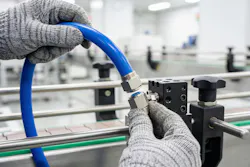
This is important not only from an operational standpoint but also a budgetary one.
The expertise required to work with hydraulic, pneumatic and electric actuation systems is wildly different in their implementation and maintenance, said Fenske.
“So, depending on what kind of expertise you have on hand, you may have to contract out other expertise to install an electric actuator and get the control algorithms working,” he said. “Likewise, if you're doing hydraulics and you don't have that expertise, you've got to get that expertise; that aspect shouldn't be minimized.”
As Richter aptly pointed out during the webinar discussion, those with years of experience and industry expertise are retiring and younger generations do not always consider fluid power as a career path. This will likely present challenges and potentially dictate actuation choices in the years ahead.
There are many considerations to take into account when deciding whether to use a hydraulic, pneumatic, or electric actuation system — or possibly even a hybrid of these technologies. And these three questions offer a good starting point for that decision-making process.
In general, Richter and Fenske said it is important to do your research, talk with others in the industry about their experiences with different technologies, really understand the application in which the solution will be used, and go into the process with an open mind.
Looking for more information on the differences between hydraulic, pneumatic and electric technologies? Check out the articles linked below.
Understanding When to Use Hydraulics
When to Specify and Use Pneumatics
The Basics and Benefits of Electromechanical Actuators
About the Author
 Sara Jensen
Sara Jensen
Executive Editor, Power & Motion
Sara Jensen is executive editor of Power & Motion, directing expanded coverage into the modern fluid power space, as well as mechatronic and smart technologies. She has over 15 years of publishing experience. Prior to Power & Motion she spent 11 years with a trade publication for engineers of heavy-duty equipment, the last 3 of which were as the editor and brand lead. Over the course of her time in the B2B industry, Sara has gained an extensive knowledge of various heavy-duty equipment industries — including construction, agriculture, mining and on-road trucks —along with the systems and market trends which impact them such as fluid power and electronic motion control technologies.
You can follow Sara and Power & Motion via the following social media handles:
X (formerly Twitter): @TechnlgyEditor and @PowerMotionTech
LinkedIn: @SaraJensen and @Power&Motion
Facebook: @PowerMotionTech