Mobile Hydraulics: Current and Future Trends Influencing System Designs
Key Highlights
- Fluid power industry experts from Faster, HydraForce and Poclain Hydraulics discuss the trends they see impacting the design of hydraulics for mobile applications.
- Automation, AI, ease of integration, and the need to increase productivity are among the top trends they see influencing hydraulic components and systems.
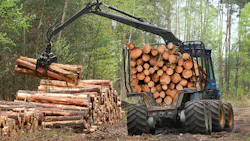
There are a wide range of trends shaping the design of today’s excavators, forklifts, tractors and other mobile machinery, as well as the hydraulic systems critical to their operation.
Broad industry trends such as automation are increasing the need for integrated sensors and electronics in hydraulic components and systems. Increased productivity, reliability and efficiency are also driving both machine and system designs, placing additional requirements on hydraulics.
To gain a better understanding of the trends influencing hydraulics technologies for mobile applications now, and in the years to come, I spoke with three experts from the fluid power industry:
- Emiliano Torresi, Product Management and Marketing Director at Faster
- Dave Ruxton, Application Engineering Manager at HydraForce
- Denis Greder, Group Marketing Director at Poclain Hydraulics
They each provided their perspectives on the current and future trends they see impacting hydraulic component and system designs.
*Editor’s note: Questions and responses have been edited for clarity.
Power & Motion: What industry trends are currently having the biggest impact on hydraulic component and system designs for mobile applications?
Read the second part of my discussion with Torresi, Ruxton and Greder in the article “Mobile Hydraulics: Sensor Integration and Electronification are Key Design Priority Areas” to learn more about technology developments their respective companies are undertaking to meet the industry trends discussed in this article.
Emiliano Torresi: The most impactful trend is the drive toward higher jobsite efficiency and productivity. This is supported by strong macro drivers: global investments in infrastructure, steady growth in residential and non-residential construction, and increasing demand linked to urbanization and reconstruction efforts. Construction continues to act as a key economic multiplier worldwide.
In this context, contractors are expected to do more with fewer resources, which is accelerating the adoption of:
- multi-purpose machines
- frequent attachment changes
- higher machine utilization.
This has a direct impact on fluid power systems, especially connection technologies, which are no longer passive components but critical enablers of uptime, flexibility, and efficiency.
Electrification is also part of this trend, but primarily as a means to optimize energy usage and jobsite performance, rather than as a standalone objective.
Dave Ruxton: Artificial intelligence (AI) is probably the hottest trend right now; everything’s got to involve AI. I think there’s a fair amount of usefulness that we can get out of AI. To us in fluid power, what it looks like is you’ve got a number of functions on machines, such as a skid steer or an excavator, and right now it requires a skilled operator. When you’re using one of those machines, there’s lots of things that you do repeatedly, such as going into a pile of dirt a certain way and level the bucket.
And to me, I think a good place to start with AI for us is having it manage some of those skilled tasks that are done over and over again; start to automate some of the functions or correct some of the operator deficiencies that [may exist].
When you're coming into a dirt pile, do you want the bucket 10 degrees down, or do you want it 12 degrees down? That's something where I think AI can [handle] some of the stuff that experienced operators are doing and duplicate that.
It's a ways out from being able to fully drive the vehicle and say, ‘I want that dirt pile moved from there to there.’ But I think we do have the processing power on [today’s machines] to have limited AI onboard that can watch [and learn from] an operator.
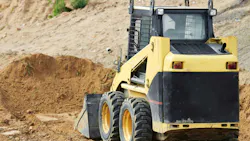
Denis Greder: There are several trends we see, such as the need for easy integration of components in machines. This means the components should be compact and make the life of the OEM easier so it doesn’t need to carry out too many operations to fit, for instance, our motors in a skid steer loader. It has to be straightforward and easy, there should not be too many connections or seals to add. That’s one thing we look at when we design our products – they are often designed for a particular application, and we try to put ourselves in the shoes of the OEM who is going to use these products.
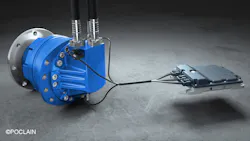
Automation of subfunctions is another trend we see which is requiring use of electronics. The market for fully automated machines is still very small. However, the subfunctions of machines are more and more automated, such as braking. Braking can of course be controlled by the driver but also can be triggered electronically if there are some obstacles which can be signaled by sensors. Safety is a big requirement [for automation], and this often requires sensors to detect potential obstacles or dangers to trigger braking or other changes in the way the machine drives.
Operator comfort is very important [which is leading to the need for] quiet operation; if there are several gears that need to be shifted, it should be done in a softer manner.
Productivity is also key; people want to get more out of their machines. One reason is labor shortages. So, machines need to [operate at] higher speeds and provide more power. We see machines getting larger. In the skid steer business, for instance, we see now [some machines] up to 130 hp whereas until recently 90 hp was maximum. We can contribute to productivity by having motors that run at higher speeds. For us, that means it’s important to design hydraulic motors used for travel and tool drives [in a way that] the oil distributed through the motor is straightforward and sized so that the flow can be higher — and there are no narrow channels or restrictions to prohibit the distribution of oil inside the motor.
Regionalization — developing products for specific global markets — sustainability as well as functional safety and cybersecurity are also important trends we see.
Power & Motion: What are the top features or capabilities mobile equipment manufacturers are looking for from hydraulic components and systems?
Emiliano Torresi: OEMs are increasingly looking for:
- Reliability and robustness under extreme operating conditions.
- Ease of integration without redesigning existing architectures.
- Compactness and modularity.
- Operator safety and ease of use.
- Reduced downtime and maintenance needs.
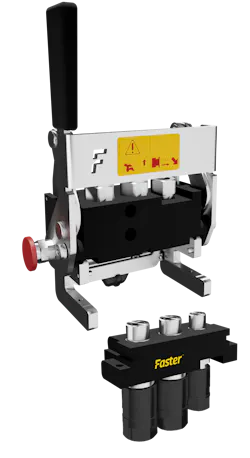
However, one critical aspect is still often underestimated: the role of connections as the primary entry point for contamination.
While significant effort is placed on system cleanliness validation, less attention is sometimes given to how contamination is generated and managed during daily operations — which is where we see a major opportunity for innovation.
Dave Ruxton: Most of it comes down to reliability and package size. Sometimes cost is a factor; obviously, at some point if you’re applying [more advanced solutions] someone is going to care about how much it costs. But we’ve run into a lot of cases where once someone is on a machine and running a function, they will pay more for a system that works and they know they can get rather than switching over to something else that’s maybe a lower cost.
[In terms of packaging] in the case where you have a bank of 40 gpm valves that’s covering a wide range of functions, a lot of times we’re able to look at it and say ‘we’ve got a valve sized for 10 gpm, one for 20 gpm and one sized for 30 gpm that can give you a package that’s 20% smaller than your competitive 40 gpm solution.’ And that’s starting to look attractive to some companies, especially if going electric on a machine. You’re already taking up as much space as possible with batteries, and now we’ve got this shrinking compartment size that’s available for the valving.
Denis Greder: The big OEMs are getting more demanding, pushing us to follow the model of the car industry where they have very stringent requirements for reliability, quality, zero defects, and short lead times. Compared to the beginning of my career, the requirements are more stringent and important. Fluid power companies like us and others in the market have become much better in terms of all these performance requirements, be it quality or on-time delivery.
Cost is also becoming very important because the market is more global. In the U.S., Chinese machinery manufacturers are enhancing the level of competition, so you need to be able to provide a competitive cost. We see also at the OEMs that there is a trend where purchasing people are regaining power versus the development or technical people in the selection of components and we know that those criteria, availability and cost, are very important to them.
Read the below content for our interviews with representatives from construction and agricultural equipment manufacturers to learn more about what they are looking for in hydraulic components and systems.
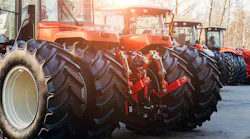 Rear view of several tractors lined up in a row
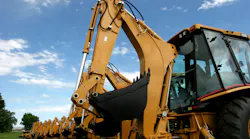 Back view of several backhoes lined up
Power & Motion: Over the next 3-5 years, what further technological development opportunities do you see for hydraulic components and systems that will be used in mobile applications?
Emiliano Torresi: Looking ahead, we see three major opportunities.
1. Hybrid connection ecosystems
The future lies in integrated connection platforms, where different media and technologies converge. We are actively developing concepts such as a Connection Hub, where hydraulic lines (oil, grease), cooling circuits (water, glycol), and electrical connections (including high voltage) are combined into a single, intelligent interface between machine and attachment.
2. Smart and connected components
Sensorization will evolve from a feature to a standard requirement, enabling real-time monitoring, predictive maintenance, and improved safety and sustainability.
3. Field-driven innovation
The biggest opportunity is to bring innovation closer to real operating conditions. Rather than over-relying on laboratory validation, the industry will increasingly focus on real usage data, operator experience, and practical contamination management.
Ultimately, we see fluid power connection technologies evolving from simple components into strategic enablers of machine performance, sustainability, and user experience.
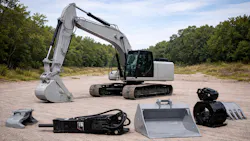
Dave Ruxton: I think it will be a continuation of the right sizing of components. A standard industry trend with cartridge valves is to have an 8 size, a 10 size, 12 size — so 1/2-, 5/8-, and 3/4-inch size valves. I would see a line of 6 size valves being attractive in the future.
Also, dividing up some of those smaller high-pressure demand, low-flow functions off on a separate pump. So, you have a tiny gear pump that's taking care of all the small high-pressure functions and then a bigger high-flow pump that's taking care of all your main functions so that you're not using a ton of energy to energize these small, high-pressure functions.
Read the article "The Trends Shaping Fluid Power Designs for Mobile Applications" to learn more about the varied trends currently impacting fluid power systems used in mobile applications.
Denis Greder: Except for very large OEMs who have in-house capabilities…the integration and electronification projects of OEM customers are getting more complex and therefore they need to rely more on their suppliers to help them in these developments. Whereas, maybe 10-15 years ago it was the will of many OEMs to do things themselves to keep things secret and proprietary.
Now, we see they are opening up and more ready to give companies like us who are solution suppliers the possibility to integrate with their electronics and go deeper into the integration of a complete system. They realize the regulatory specifications and constraints are so high that they cannot do everything by themselves. So, for the fluid power companies like us that is opening the door to go from [offering] components to full system solutions.
About the Author
 Sara Jensen
Sara Jensen
Executive Editor, Power & Motion
Sara Jensen is executive editor of Power & Motion, directing expanded coverage into the modern fluid power space, as well as mechatronic and smart technologies. She has over 15 years of publishing experience. Prior to Power & Motion she spent 11 years with a trade publication for engineers of heavy-duty equipment, the last 3 of which were as the editor and brand lead. Over the course of her time in the B2B industry, Sara has gained an extensive knowledge of various heavy-duty equipment industries — including construction, agriculture, mining and on-road trucks —along with the systems and market trends which impact them such as fluid power and electronic motion control technologies.
You can follow Sara and Power & Motion via the following social media handles:
X (formerly Twitter): @TechnlgyEditor and @PowerMotionTech
LinkedIn: @SaraJensen and @Power&Motion
Facebook: @PowerMotionTech